For decades, Asia Pacific (APAC) was widely understood as the manufacturing engine of the global economy. Supply chains were designed to optimize scale and cost, with products flowing from factories across Asia to consumers in Europe and North America. That structure no longer reflects reality.
Today, APAC sits at the center of a fundamental shift in how global supply chains are designed and operated. Geopolitical risk, supply disruptions, and growing sustainability expectations have accelerated regionalization; the deliberate move away from dependence on single markets toward more diversified, resilient regional networks. At the same time, consumer demand within APAC has grown dramatically, reshaping trade lanes and fulfillment models.
Regionalization is not a temporary response to disruption. It represents a structural evolution in how companies think about production, inventory, and customer proximity. In APAC, this shift is particularly pronounced, and it demands a new approach to logistics, network design, and cross‑border collaboration.
Shifting Trends: Consumerism, Ecommerce, and the End of a Pure Export Model
One of the most significant forces driving regionalization in APAC is the rise of regional consumerism. Historically viewed as the world’s factory floor, the region is now one of the fastest‑growing consumer markets globally. Direct‑to‑consumer and ecommerce channels have expanded at pace, particularly across Southeast Asia and India, fundamentally changing demand patterns.
COVID accelerated this transformation. Consumers across the region rapidly adopted online purchasing and home delivery, and those behaviors have proven durable. The result is a shift away from bulk export movements toward higher‑velocity, smaller order fulfillment models that prioritize speed, accuracy, and flexibility.
This does not mean manufacturing is leaving APAC, quite the opposite. Core manufacturing capabilities remain deeply embedded and difficult to replicate elsewhere at scale or with the same cost or quality. What is changing is where value is added. Increasingly, manufacturers are separating upstream production from downstream configuration, assembly, and fulfillment. Late‑stage customization, labeling, kitting, and packaging are being positioned closer to consumption markets, allowing companies to reduce inventory risk and respond more accurately to demand.
For supply chains, this represents a move from linear, factory‑to‑port models to integrated regional ecosystems that combine manufacturing, fulfillment, and consumption within the same geography.
Regionalization Through Country Collaboration
Unlike some parts of the world, regionalization in APAC is not unfolding as a zero‑sum competition between countries. Instead, it is increasingly shaped by collaboration, with each market leaning into its strengths and contributing to a broader regional supply chain structure.
Singapore continues to play a critical role as a strategic control center, offering advanced infrastructure, regulatory stability, and strong connectivity to global trade networks. Malaysia provides scalable, high‑quality logistics and assembly infrastructure at a more competitive cost base. Thailand remains a manufacturing leader in automotive and electronics, while Vietnam and Indonesia bring growth capacity and rising consumer demand. India continues to expand across automotive, pharmaceutical, and technology sectors.
This complementary model allows supply chains to be designed regionally rather than country by country. Manufacturers can source, assemble, customize, and distribute across borders without duplicating infrastructure in every market. Governments have supported this shift through special economic zones, free trade agreements, and improved cross‑border processes.
The result is a regional ecosystem in which resilience is built through diversity, not redundancy.
Creative Transportation Solutions Across Borders
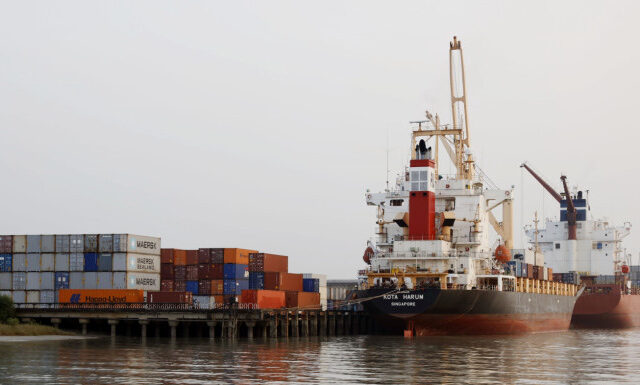
As regionalization deepens, transportation strategies are evolving alongside it. Intra‑Asia trade lanes have long existed, but their role has expanded significantly. What were once primarily industrial supply routes are now also supporting final fulfillment, ecommerce replenishment, and rapid market response.
Southeast Asia, in particular, benefits from strong multimodal connectivity. Short‑haul road transport between Singapore, Malaysia, and Thailand complements dense port networks and growing sea‑air and sea‑land routing options. This enables companies to balance speed, cost, and reliability while maintaining flexibility in the face of disruption.
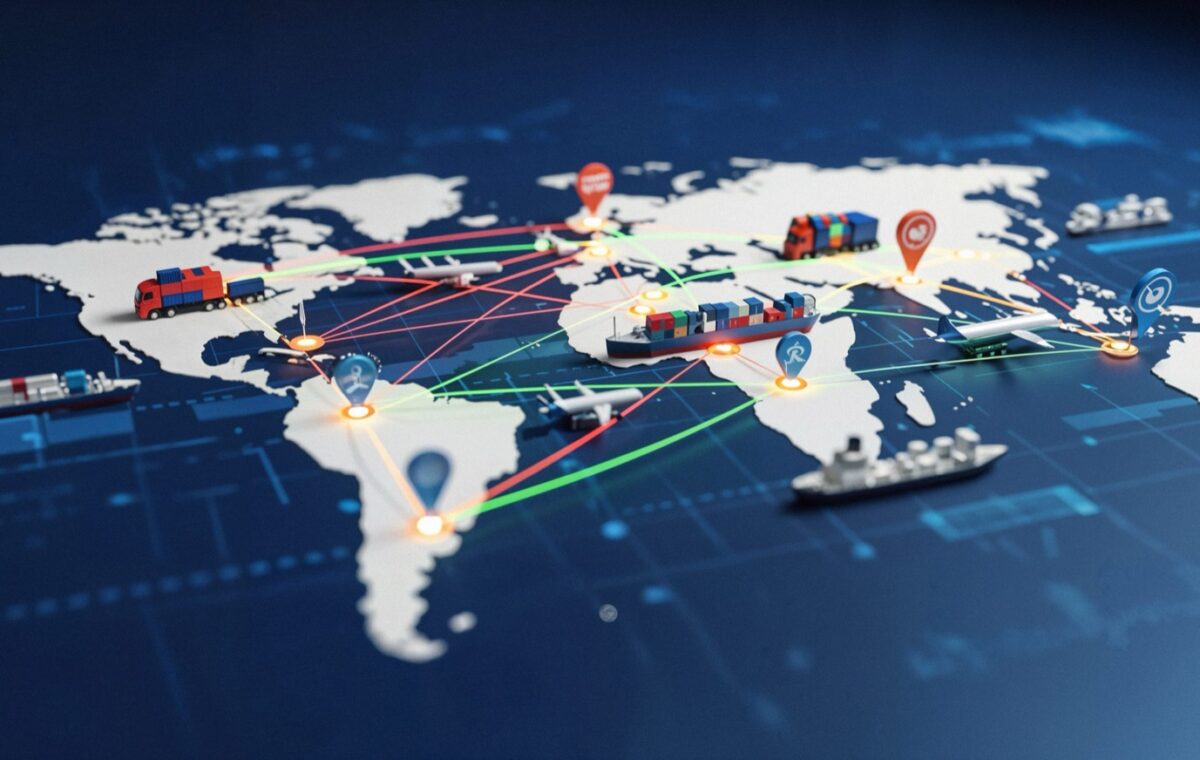
Regionalization has also changed how companies think about risk. Instead of relying on a single long‑haul route, supply chains can be dynamically rerouted across ports, borders, and modes. Inventory can move regionally to where demand emerges, rather than remaining fixed in one national market.
Executing these strategies successfully requires deep operational knowledge. Customs processes, regulatory scrutiny, and cultural norms vary widely across APAC. The ability to design routing options is only valuable if paired with the expertise to execute them consistently.
Hub‑and‑Spoke Models as the Foundation of Regional Efficiency
At the heart of effective regionalization is the hub‑and‑spoke model. Rather than replicating full distribution networks in every country, companies are increasingly consolidating inventory in strategically located regional hubs, supported by smaller spoke operations closer to end consumers.
This approach delivers several advantages. Centralized hubs allow inventory pooling, reducing overall stock levels and working capital. They also enable late‑stage differentiation, so products can be customized once demand signals are clearer. Spoke locations then focus on proximity‑driven activities such as final quality checks, compliance, and last‑mile delivery.
In Southeast Asia, the Singapore–Johor Special Economic Zone illustrates the power of this model. Regional hubs located in southern Malaysia combine proximity to global trade infrastructure with a more competitive cost structure, serving multiple markets from a single inventory base. From there, inventory can be replenished into higher‑cost markets such as Singapore, Japan, or Australia quickly and efficiently.
Well‑designed hub‑and‑spoke networks improve resilience by allowing inventory to be rebalanced across markets as conditions change. They also provide scalability, enabling companies to enter new markets without rebuilding their supply chain from scratch.
Technology as the Enabler of Regionalized Networks
Regionalization increases complexity, and technology is what makes that complexity manageable. Visibility, analytics, and orchestration tools are essential to operating multi‑country networks efficiently.
Advanced forecasting, real‑time inventory visibility, and order orchestration allow companies to make informed decisions while goods are still in motion. Inventory can be redirected, reprioritized, or reallocated across markets in response to demand shifts. At GXO we have started scaling GXO IQ, an AI-powered, intelligent logistics platform that orchestrates more productive warehouse operations. This capability becomes especially valuable in a region where forecast accuracy can vary, and consumer trends change rapidly.
Automation also plays a growing role. Rising labor costs, demographic shifts, and workforce expectations have accelerated the adoption of robotics and warehouse automation across APAC. Automation is no longer viewed as optional or applicable only in high‑cost markets. It is increasingly a prerequisite for scalability, consistency, and workforce sustainability.
Crucially, technology must be deployed in a way that balances global standardization with local flexibility. Systems must support multiple languages, regulatory environments, and operating practices while maintaining a single source of truth across the network.
The Strategic Importance of a Strong Logistics Service Provider
As supply chains regionalize, the role of the logistics solutions provider has evolved from executional support to strategic partnership. Navigating APAC requires far more than infrastructure. It requires local expertise, cross‑border experience, and the ability to translate regional complexity into actionable, customer‑specific solutions.
A strong service provider brings perspective that individual companies may lack, insight into how different markets interact, which trade lanes perform reliably, where regulatory friction may arise, and how inventory should be positioned to balance cost and service. This experience is particularly important when designing hub‑and‑spoke networks, determining where late‑stage customization should occur, or deciding which activities truly need to be close to the consumer.
Equally important is flexibility. Regionalization is not a one‑time redesign. Consumer behavior, trade policy, and geopolitical conditions will continue to evolve. A capable logistics partner helps companies reassess and adapt their networks over time, rather than locking them into static structures that quickly become outdated.
In this environment, logistics becomes a strategic advantage, not merely an outsourced function.
Looking Ahead: Regionalization as a Long‑Term Strategy
Over the next decade, regionalization across APAC will continue to deepen. Consumer growth, sustainability expectations, digital adoption, and geopolitical complexity all point toward supply chains that are more regional, more flexible, and more closely aligned to demand.
At GXO, we believe success depends on the ability to design networks that leverage country collaboration, use creative transportation solutions, and deploy hub‑and‑spoke models supported by technology and strong execution. Companies that treat logistics as a strategic differentiator, supported by experienced partners, will be best positioned to navigate this new reality.
Regionalization is not about retreating from global trade. It is about building smarter, more resilient networks that reflect how the world now operates. In APAC, that evolution is already well underway.
About Scott Copeland
Scott Copeland is the Head of Asia Pacific at GXO Logistics, based in Singapore, where he is responsible for driving growth, operational excellence, and strategic network development across one of the world’s most complex and dynamic logistics regions. With more than 25 years of international supply chain and contract logistics experience, Scott has held senior leadership roles across Asia Pacific, Europe, and emerging markets, including executive positions at Dyson, Schneider Electric, and DHL Supply Chain.

His career has been defined by leading large‑scale logistics transformations, building resilient regional supply networks, and advancing technology‑enabled fulfillment and distribution models to support evolving consumer and ecommerce demand. Scott brings deep expertise in network optimization, automation, and cross‑border operations, and is recognized as a trusted voice on the future of supply chains in Asia Pacific.