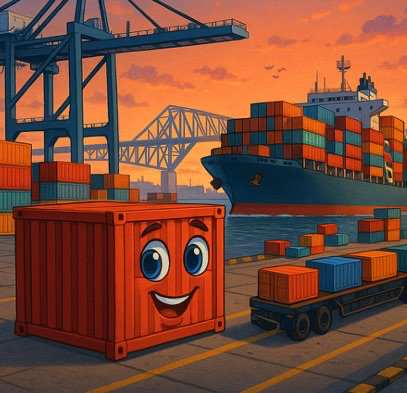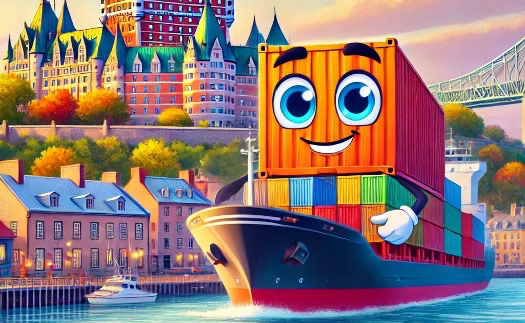
In the world of supply chain and shipping, it’s easy to overlook the magic behind how things move. But what if we could spark that curiosity in the next generation through storytelling? That’s exactly how Connor the Container was born. The idea came to me during one of my many conversations about global logistics, where I found myself explaining the basics of container shipping to my High School daughter.
As we talked about ports, vessels, and containers, a thought struck: what if a container had a story to tell? One that could teach children about global trade in a fun, engaging way? That seed grew into Connor the Container, a children’s book that follows an eager little container on his very first voyage across the world. From being loaded with bananas in Ecuador to arriving at his destination in China, Connor’s journey introduces kids to the fundamentals of shipping, geography, and supply chain logistics.
Of course, bringing Connor to life was not a solo journey. I was incredibly fortunate to receive generous support from professionals across the logistics industry. Colleagues stepped forward to help with translations into multiple languages (Korean, Japanese, Spanish, and French), ensuring Connor could connect with children in their native tongues. Others offered their insights and time to guide me through the publishing process, from layout to ISBN registration, right through to print production in Japan.
Their enthusiasm reminded me of the strength of our industry—not just in moving goods, but in building communities. Today, Connor the Container is more than just a character; he’s a tool for education, outreach, and sparking young imaginations. As the logistics landscape evolves, so too does our opportunity to make it relatable. And who better to help lead that charge than a smiling red container named Connor?
The Adventure Continues Online Connor’s story doesn’t end with the book. Through his Instagram page @connor.the.container, Connor continues his journey—sharing bite-sized stories, educational fun facts, and behind-the-scenes looks at the import/export world. From the Panama Canal to flexitanks, from holiday toy shipping to port rankings, Connor introduces kids (and adults!) to key industry concepts in an approachable and visual way. Whether it’s a “Where’s Connor now?” post or a quick fact about the world’s largest shipping vessel, Connor’s feed keeps the magic of logistics alive—one post at a time.
Connor’s Got Flex! Ever wondered how wine, juice, and cooking oil travel the world safely inside shipping containers like Connor? Meet the Flexitank— Connor’s stretchy sidekick in bulk liquid logistics! What’s a flexitank? It’s a giant, durable bag that fits inside a standard 20-foot container—like Connor! It transforms him into a bulk liquid powerhouse, moving 16,000 to 24,000 litres of non-hazardous goodness in one go Flexitank vs ISO Tank: Flexitank = one-way, cost-effective, ideal for nonhazardous liquids ISO Tank = reusable, great for hazardous or mixed liquids Why Flexitanks Rock: No special loading/ unloading needed Hygienic, safe & customisable Made of tough polyethylene + polypropylene Used for wine, oils, juices, liquid latex, and more!
From vineyards in Australia to kitchens in Japan , Connor and his Flexitank buddy are keeping the world flowing— one slosh at a time! Connor’s Tariff Trouble Big changes are hitting the seas. Starting this week, goods loaded in China face a 145% tariff when arriving in the US. That means fewer ships, less cargo—and higher prices ahead. Imports from China could drop up to 80% this year. = top source for shoes, toys, electronics & more Shelves won’t be empty, but choices will shrink.
Expect higher prices by summer. At the Port of LA, where nearly half the business comes from China, container volume is already down 35%. Truckers, warehouse workers, and small businesses all feel the squeeze. Connor’s keeping his wheels turning—but it’s getting harder to deliver what people need. Key Canadian Export Facts: In 2018, petroleum products, LNG, and fuels generated $21.6 billion in exports from Canadian ports.
In 2023, bulk exports increased by 13%, reaching a record 91.5 million metric tonnes—including grain, sulphur, coal, and petroleum products. Canada’s top exporting sectors: Energy (18%) Automotive/Parts (11%) Metals & Minerals (10%) Consumer Products (9%) Port Metro Vancouver is Canada’s largest port and the third-largest in North America by cargo tonnage! Canada is also a major fish & seafood exporter, shipping over $7.6 billion worth of seafood in 2023!
From coast to coast, Connor the Container is proud to help move Canada’s key exports to destinations worldwide! Where do you think Connor will go next? Drop a in the comments! Key points about the Port of Montreal’s TEU capacity: Current capacity: Around 1.5 million TEUs Expansion project in Contrecœur: Aims to add 1.15 milli on TEUs to the port’s capacity Large container ships: The port can handle large container ships Wayne Yoshida, aka Supply Chain Wayne™, a Senior Talent Acquisition and Attraction Manager at A.P.
Moller – Maersk, the world’s largest integrated container logistics company. With over 10 years of experience in executive recruitment and talent acquisition, I specialize in sourcing and attracting top talent for the supply chain and logistics industry. Leading the recruitment and attraction strategies for Maersk’s NEA & OCE regions, working closely with business and HR stakeholders to understand and cater to their hiring needs and capabilities.
Wayne is also responsible for creating and implementing programs to enhance the employer brand and reputation of Maersk, such as job fairs, recruitment events, and social media campaigns.